SAF ForestEd
Host a Webinar with ForestEd Today!

Webinars are a great way to extend knowledge across the sector. Leverage ForestEd to extend the reach of emerging science, technology, and other hot topics to the profession.
Webinars hosted by SAF Communities of Interest: APPLY TODAY!
Be a professional development partner with SAF and bring your topics to the ForestEd platform. PARTNERS APPLY HERE!
Forest Vegetation Simulator Virtual Workshop
Forest Vegetation Simulator (FVS) is among the short list of free open-source growth and modeling tools. This basic training is facilitated live and serves to reacquaint or introduce FVS as a tool to support you in your forestry and related projects for diverse landownership dynamics. With FVS you can take advantage of data-informed ecosystem-based variants.
Myth buster: FVS, while developed and managed by the USDA Forest Service, is applicable to landscapes beyond federally-managed lands.
Select an FVS training package that aligns best with your professional development and project needs. Everyone has access to working with single and multi-stand runs (Day 1) and basic management thinning (Day 2). Choose to dive deeper with more utilizing the FVS fire and fuels features (Day 3), modeling more complex management scenarios including regeneration (Day 4), or all 4 days. Each day offers a skills challenge to help put your learning into practice.
Each day covers a distinct topic:
Day 1 - Getting Started with Basic FVS Runs - November 3, 1-5:15 PM ET - 3.5 Category 1 CFEs
Day 2 - Modeling Basic Management with Thinnings - November 4, 1-6:30 PM ET - 4.0 Category 1 CFEs
Day 3 - Modeling Fire Applications and Fuel Mitigation - November 5, 1-6:30 PM ET - 4.0 Category 1 CFEs
Day 4 - Modeling Regeneration and Complex Management Scenarios - November 6, 1-5:30 PM ET - 3.5 Category 1 CFEs
Registration is limited to a maximum of 30 registrants, sign up today!
MSU Regional Forest Carbon & Climate Adaptation Short Courses
These two courses are meant to develop foundational knowledge in the areas of climate regulation, forests, forest carbon, and carbon initiatives.
$175 Member // $220 Non-member
Registration open through November 10, 2026 // Access opens November 2, 2026 // Course ends December 31, 2026
Paced over 6 weeks
3.5-4.5 Category 1 CFEs
-
Contains 20 Component(s), Includes Credits
This short course will develop your foundational knowledge in the relationship between forests, climate, and carbon initiatives such as carbon projects and markets.

Course information
This short course—created by Michigan State University, Forest Carbon and Climate Program—develops foundational knowledge on the relationship between forests, climate, and carbon initiatives such as carbon projects and markets. The course consists of four presentations covering the following topics: 1) Introduction to Forest Carbon Initiatives; 2) Designing Initiatives with Feasibility, Risk, and Financial Considerations; 3) Quantification and Data Collection; and 4) Monitoring and Accessing Markets. Each presentation focuses on key topics and features unique learning outcomes for participants. Course content includes recorded presentations and recommended readings. This course is focused on United States based carbon markets, but information about projects can be broadly applied.
What you will learn:
This course begins with an introduction to forest carbon projects, programs, policies, and their goals. Aspects covered include types of forest carbon projects and their requirements, how forest carbon offset credits are calculated and created, and an overview of how offsets are valued, priced, and traded in voluntary and compliance markets. Next, elements of forest carbon project planning, financial considerations, benefits and co-benefits are discussed. Concepts central to forest carbon project planning such as establishment of baselines, measurement of additionality, and planning for permanence are introduced and explained. Learners are presented with information on project measurement, monitoring, reporting, and verification including techniques for data collection, quantifying carbon, and capturing activity data. Finally, participants review accepted standards designed to ensure the quality of forest carbon offsets and lend credibility to forest carbon projects and carbon markets.
Is this course for you?
Forest Carbon Credits and Initiatives is an introductory-level course appropriate for any natural resource professional seeking a better understanding of the basic principles underlying carbon credits, markets, and projects. However, it is recommended that participants have some foundational knowledge of forest carbon pools and fluxes, forest disturbances, and an understanding of how forest carbon is measured and calculated. Learners can receive training on this background knowledge by taking the course Physical Science of Forests, Climate & Carbon Background available on ForestEd. This knowledge may also be gained by participating in professional development courses offered through the Michigan State University, Forest Carbon & Climate Program.
This introductory course covers fundamental concepts, the understanding of which can better equip learners to engage in conversations with colleagues, clients, and other diverse audiences who have an interest in forest carbon markets. This course may also serve as a refresher for those with a basic understanding of the relationships between forests, carbon projects, and offset markets. Reinforcing your current knowledge can strengthen your understanding, especially as new resources, tools, and policies continue to emerge in relation to offset projects, carbon crediting, measurements, and forest carbon markets.
Open registration
Registration is open through November 10, 2026 at 11:55 pm ET.
For group registrations or registering someone other than yourself please contact [email protected] or 202-938-3910.
Pricing
Member: $175
Non-member: $220
Join SAF TODAY to take advantage of the growing member benefits, including course savings.
Course start date
Course content will be available starting November 2, 2026 at 10:00am ET.
Course access
Course is accessible through December 31, 2026 at 11:55pm ET.
Course pace
This course is self-paced with an expected completion time frame of up to 6 weeks, but 2 bonus weeks are available to support your success of completing on time. This course must be completed in sequence and each presentation must be viewed in entirety to progress to the next section. Once a section is complete, you can return to the previous section. ForestEd will send you reminders along the way to help you stay on track.
Learning Objectives
Upon successful completion of this short course, you will be able to:
1. Apply broad science and policy concepts to project-scale thinking
2. Explain the process and key components of designing a forest carbon project
3. Articulate how activities create carbon credits in forest carbon projects
4. Demonstrate how carbon benefits are calculated by creating baselines and measuring additionality
5. Identify how to find and utilize guidance for forest carbon project development from various carbon programs and projects
6. Describe and understand the nuance of measurement, monitoring, reporting, and verification in forest carbon projectsRubric
Successful completion of the course is measured by mastering each module's quiz to assess how well you recall and apply your new knowledge. You have unlimited attempts for each quiz to master the content. Passing score for each quiz is 80%.
Course Evaluation
Participant feedback is appreciated to help the course curators and subject matter experts continually improve the course for future participants.
CFEs
Upon successful completion of this course, you will earn 4.5 CFEs in Category 1. CFEs will automatically be added to your CFE record located on www.eforester.org.
Certificate
Upon successful completion of this course and course evaluation, participants may download and print a certificate verifying completion of the course and earning CFEs. CFEs will be uploaded to participant CFE records by the end of the day of course completion (11:59 pm ET). Certificates must be downloaded by December 31, 2026 at 11:55 pm ET.
Get Started or Return to Place in Course
Once you are registered for the course, access this course within your MY DASHBOARD. You can pause at any point during the course and you can return right where you last left off. Simply select the presentation you were last viewing and you will be prompted to select if you wish to start where you left off. For additional tips for success, watch the Course Tutorial Video preceding the Welcome Presentation. Note: this course uses pop-up windows so be sure to enable pop-up windows on your browser.
Course Resources
Additional course resources are available within the Resources tab and within the Contents tab course sections.
Need Help?
For ForestEd questions, visit FAQs, email [email protected], or watch the Course Tutorial within the Contents tab. For questions about this course's content email [email protected]. For technical assistance, you can email [email protected].
Refund
This is a non-refundable item. Please view FAQs for additional information.
-
You must log in to register
- Non-member - $220
- Member - $175
- More Information
-
You must log in to register
-
Contains 24 Component(s), Includes Credits
This short course will develop your foundational knowledge in the relationship between climate regulation, forests, and forest carbon.
Course information
This course—curated by Michigan State University, Forest Carbon and Climate Program— develops foundational knowledge on the relationship between climate regulation, forests, and forest carbon. In five presentations, the course covers: 1) Carbon Cycle and Storage; 2) Humans, the Global Carbon Cycle, and Terrestrial Sinks; 3) Forest Ecosystems and Carbon Storage; 4) Forest Ecosystem Carbon Pools and Fluxes; and 5) Disturbances and their Carbon Impact. Each presentation focuses on key topics and features unique learning outcomes for participants. Course content includes recorded presentations, links to online resources, and recommended reading.
What you will learn
This course begins with an introduction to greenhouse gases in the atmosphere, an explanation of the importance of carbon, and a discussion about why climate experts focus on this element. We review terminology, define units of measure, and explore how carbon is measured and calculated. Then, primary carbon sinks and sources of greenhouse gas emissions are outlined globally, including a review of how and when carbon moves between them—such as through land use change and fossil fuel combustion. Next, a review of forest composition, structure, and function by forest type is provided with linkages to the various carbon pools found in forested ecosystems. This review includes a comparison of different forest types found around the world focusing on their unique carbon storage attributes. Finally, major forest disturbances such as pests, pathogens, fire, and wind are discussed within the framework of how such disturbances affect carbon storage in forests.
Is this course for you?
Physical Science of Forests, Climate Regulation, and Carbon Storage is an introductory-level course appropriate for any natural resource professional seeking a better understanding of the role carbon plays in climate regulation within the context of forests and forestry. This foundational course covers fundamental concepts in forest science and carbon dynamics, the understanding of which can better equip you to engage in conversations with your colleagues, customers, and other diverse audiences who have an interest in climate and forest carbon. This course may also serve as a refresher for those with a basic understanding of the relationships between forests, carbon, and climate. Reinforcing your current knowledge can strengthen understanding, especially as new resources, tools, and policies continue to emerge in relation to climate regulation and forest carbon.
Registration
Registration is open from October 1, 2026 to November 10, 2026 at 11:55 pm ET.
For group registrations or registering someone other than yourself please contact [email protected] or 202-938-3910.
Pricing
Member: $175
Non-member: $220
Join SAF TODAY to take advantage of the growing member benefits, including course savings.
Course start date
Course content will be available starting November 2, 2026 at 10:00am ET.
Course access
Course is accessible through December 31, 2026 at 11:55pm ET.
Course pace
This course is self-paced with an expected completion time frame of up to 6 weeks, but 2 bonus weeks are available to support your success of completing on time. This course must be completed in sequence and each presentation must be viewed in entirety to progress to the next section. Once a section is complete, you can return to the previous section. ForestEd will send you reminders along the way to help you stay on track.
Learning Objectives
Upon successful completion of this short course, you will:
1. Identify the carbon cycle and its connection to natural and human-caused global warming.
2. Describe trends in atmospheric GHG emissions and their impact on the carbon cycle.
3. Explain sources and sinks, and the role of natural forests and the forestry sector.
4. List the ways forest composition, structure, and function influence carbon storage.
5. Identify the pools of carbon within forested ecosystems.
6. Apply knowledge of forest structure differences to forest carbon pools and fluxes by forest type.
7. Interrelate global distribution of carbon storage in forests.
8. Identify the methods by which management planning and decision-making can minimize the carbon losses from natural and human-caused disturbances.Rubric
Successful completion of the course is measured by mastering each module's quiz to assess how well you recall and apply your new knowledge. You have unlimited attempts for each quiz to master the content. Passing score for each quiz is 80%.
Course Evaluation
Participant feedback is appreciated to help the course curators and subject matter experts continually improve the course for future participants.
CFEs
Upon successful completion of this course, you will earn 3.5 CFEs in Category 1. CFEs will automatically be added to your CFE record located on www.eforester.org.
Certificate
Upon successful completion of this course and course evaluation, participants may download and print a certificate verifying completion of the course and earning CFEs. CFEs will be uploaded to participant CFE records by the end of the day of course completion (11:59 pm ET). Certificates must be downloaded prior to December 31, 2026 at 11:55pm ET.
Get Started or Return to Place in Course
Once you are registered for the course, access this course within your MY DASHBOARD. You can pause at any point during the course and you can return right where you last left off. Simply select the presentation you were last viewing and you will be prompted to select if you wish to start where you left off. For additional tips for success, watch the Course Tutorial Video preceding the Welcome Presentation. Note: this course uses pop-up windows so be sure to enable pop-up windows on your browser.
Course Resources
Additional course resources are available within the Resources tab and within the Contents tab course sections.
Need Help?
For ForestEd questions, visit FAQs, email [email protected], or watch the Course Tutorial within the Contents tab. For questions about this course's content email [email protected]. For technical assistance, go to help.commpartners.com for self troubleshooting and/or live chat, or you can email [email protected].
Refund
This is a non-refundable item. Please view FAQs for additional information.
-
You must log in to register
- Non-member - $220
- Member - $175
- More Information
-
You must log in to register
Webinar Products
-
Contains 3 Component(s), Includes Credits Includes a Live Web Event on 11/12/2026 at 2:00 PM (EST)LIVE 11/12 - 2 PM ET
1.0 Category 1 CFEs - This webinar will feature a discussion about leadership and the changing dynamics of the forestry and natural resource industry with the Society of American Foresters CEO, Terry Baker.
YP Meetup Session information
This webinar will feature a discussion about leadership and the changing dynamics of the forestry and natural resource industry with the Society of American Foresters CEO, Terry Baker.
This webinar will be live on Thursday, November 12, 2026 from 2 - 3:15 pm ET.
These sessions are available for any SAF member in good standing under the age of 40. Participating in these virtual sessions hosted by SAF's young professionals is a great way to receive, contribute, and add value to your SAF membership. JOIN SAF to engage in SAF's Young Professionals group and tap into the growing membership benefits.
Is this program for you?
This YP Meetup is intended for SAF's Young Professionals. The Society of American Foresters (SAF) defines “young professional” as any member in good standing under the age of 40. While you may be young at heart, this program is reserved for the Young Professionals Group.
Registration
1. Click REGISTER to the right of the webinar title. Be sure to log in with your SAF account username and password.
2. After checking out, the YP Meetup will be available on your MY DASHBOARD page here on ForestEd.
For group registrations or registering someone other than yourself please contact [email protected] or 202-938-3910.
Pricing
Registration is FREE ($0) for SAF Young Professionals. Registration is required to gain access to the session.
Access
The session is accessible within the Contents tab (to the right of the Overview information) and will be live on Thursday, November 12, 2026 from 2 - 3:15 pm ET.
This webinar will not be recorded.
Session duration
This program is 1 hour and 15 minutes.
Learning objectives
Upon successful completion of this YP Meetup, you will be able to:
1. Discuss the changing landscape of the forestry and natural resource sectors with peers and the public.
2. Engage in conversations regarding future pathways for forestry and natural resource professionals.
Rubric
Successful completion of the session is measured by participating in the entire program and completing the evaluation.
Evaluation
Participant feedback is appreciated to help improve and inform future programming.
CFEs
Upon successful completion, you will earn 1.0 CFEs in Category 1. CFEs will automatically be added to your CFE record located on www.eforester.org. You will receive CFEs for participating in the complete program and completing the evaluation.
Certificate
Upon successful completion of this webinar and the evaluation, participants may download and print a certificate verifying completion of the webinar and earning CFEs. CFEs will be uploaded to participant CFE records by the end of the day (11:59 pm ET). You must download your certificate by April 12, 2027 at 12:00am.
Return to Session
Once you are registered, access this session within your MY DASHBOARD. Prior to the start time, the program will be listed under "Upcoming Live Events." Following the end of the program, you can relocate it within the general listing of registered items of YOUR DASHBOARD.
Resources
Additional resources are available within the Resources tab and within the Contents tab.
Need Help?
For ForestEd questions, visit FAQs, email [email protected], or check out the registration quick tips in the Handouts tab. For questions about SAF Young Professionals, contact the Elizabeth Buhl at [email protected]. For technical assistance and questions about this session, email [email protected].
Refund
There is no fee for this session. Thus, it is a non-refundable item. Please view FAQs for additional information.
Terry Baker
CEO
Society of American Foresters
Terry Baker is a passionate and long-time SAF member, a seasoned leader, and a powerful advocate for forestry. His entire career has been intertwined with SAF (since 2002); in fact, Terry credits SAF with helping to develop him as a professional and he is paying it forward by mentoring students and young professionals.
Baker has a reputation for being a leader who values relationships, a leader who listens, and a leader who takes action. He has experience in building partnerships and strategic alliances to leverage outcomes and is expanding relationships with key partners and stakeholders to strengthen SAF’s voice and advance the profession as well as the members.
He has been involved in a number of external communication efforts to raise the profile of forestry and foresters. He was filmed for Colorado’s segment of America’s Forests with Chuck Leavell and interviewed for Tom Davidson’s young leader’s podcast series. Terry is working with Tom to develop a Leadership in Nature podcast series that focused on professionals of color.Terry has worked for the USDA Forest Service as a forester, supervisory forester, District Ranger, and Deputy Forest Supervisor, in Florida, Oregon, Nebraska, Arizona, and Colorado, respectively. He has a Master of Forestry from Yale University (2007), a Bachelor of Science in Forest Resources and Conservation from the University of Florida (2004), and a Bachelor of Arts in Agricultural Sciences from Florida A&M University (2004).
Baker believes that SAF has a powerful role to play in helping the public understand the valuable role that forestry professionals play in the sustainability of our nation’s forests, our local communities, and state’s economies.

Ashley Martone (Moderator)
SAF Young Professionals Board Representative
Natural Resources Conservation Service
Ashley Martone is the SAF Young Professionals Board Representative for 2026. She has been on the SAF YP Planning Team for 5 years. Ashley is currently based in Washington County, Maine. With a professional background in forestry and human services, she takes a people focused approach to conservation and land stewardship.
Maxwell Schrimpf
PhD Student
Ecosystem-Based Forest Management Lab, University of Alberta
Elliot Smith (Moderator)
Big Darby Forestry Consulting
Amanda Penn (Moderator)
Forest Geneticist
Pennsylvania Department of Conservation and Natural Resources
Quinn Kawamoto (Moderator)
Bureau of Land Management
Abigail Jamison (Moderator)
Pennsylvania DCNR
Hollis Crapo (Moderator)
Regulation Assistance Forester
Washington State Department of Natural Resources
Husband and Father of four, Hollis works for Washington State’s Small Forest Landowner Office. Over the last decade he has worked in timber sales layout and forest regulation. He currently assists small forest landowners in navigating Washington state Forest Practices Rules, regulation, and permitting. He is a subject matter expert in Washington state Forest Practices Rules. He also has a professional interest in forest policy and agroforestry.
Clark Cederberg (Moderator)
Lyme Great Lakes
Ashley Garrison (Moderator)
Ashlee Lehner (Moderator)
Minnesota Forests
Amber Marchel (Moderator)
Lyme Great Lakes
Blair Owen (Moderator)
Weyerhaeuser
Trevor Keough (Moderator)
Resource Analyst
Molpus Woodlands Group
Trevor received his bachelor's degree in Forest Operations from Paul Smith’s College in Northern New York. Post grad, he worked for Baillie Lumber Company as a log marketer before transitioning to a consulting forester position with F&W Forestry Services. While working, Trevor pursued his Master of Science through the Distance program with Mississippi State University with a focus on forest planning. After receiving his degree, Trevor went to work the Molpus Woodlands Group as a Resource Analyst.
Sean Horan (Moderator)
Elizabeth Buhl (Moderator)
Director
SAF
James Williams (Moderator)
Kyle Dues (Moderator)
-
You must log in to register
- Member - Free!
- More Information
-
You must log in to register
-
Contains 3 Component(s), Includes Credits
Learn how active forest management and harvesting can align with carbon program objectives and climate-smart forestry principles.
Webinar information
Foresters are increasingly navigating the intersection of timber management and carbon markets. Join us to examine how harvesting strategies affect carbon stocking and sequestration, which practices are recognized as climate-smart forestry, and how landowners can continue active forest management and earn revenue while participating in carbon programs.
Is this webinar for you?
This webinar is intended for foresters, natural resource managers/land managers and landowners (and others interested in participating in similar programs).
Registration
1. Click REGISTER to the right of the title. Be sure to log in with your SAF account username and password.
2. After checking out, this webinar will be available on your MY DASHBOARD page here on ForestEd.
For group registrations or registering someone other than yourself please contact [email protected] or 202-938-3910.
Pricing
This webinar is a FREE webinar sponsored by Chestnut Forest Carbon Works, and costs $0 for both SAF Members and Non-Members.
You will need to have an SAF account to register for this learning product. To register for a free SAF account, click the 'Log In' button in the top right corner, then click 'Create a new account'.
Join SAF TODAY to take advantage of the growing member benefits, including course savings, free community of interest webinars, and more!
Webinar Access
The webinar was live on Thursday, September 10, 2026 from 1-2pm ET.
Its archived recording is available for viewing through September 10, 2027.
Access this learning product within the Contents tab (to the right of the Overview information).
Webinar duration
This webinar is 1 hour.
Learning objectives
Upon successful completion of viewing this webinar recording, you will be able to:
1. Define the relationship between timber harvesting and forest carbon outcomes.
2. Identify the ways in which various harvesting strategies impact carbon stocking and sequestration.
3. List climate-smart forestry practices recognized within carbon programs.
4. Describe how landowners can balance active forest management with carbon revenue opportunities.
5. Identify carbon program enrollment and participation requirements.
Rubric
Successful completion of this learning product is measured by viewing the entire webinar and completing the evaluation.
Evaluation
Participant feedback is appreciated to help us continually improve ForestEd offerings for future programming. Evaluations must be completed to receive CFEs.
CFEs
Upon successful completion of this learning product, you will earn 1.0 CFEs in Category 1. CFEs will automatically be added to your CFE record located on www.eforester.org by the end of the day (11:59 pm ET).
Certificate
Upon successful completion of the webinar and filling out its evaluation, participants may download and print a certificate verifying completion of this learning product and earning SAF CFEs.
Return to webinar
Once you are registered for the recording, access this webinar recording within your MY DASHBOARD. You can return to download your certificate by accessing the webinar information within the general listing of YOUR DASHBOARD through September 10, 2027.
Need Help?
For ForestEd questions, visit FAQs, email [email protected], or check out the registration quick tips in the Handouts tab. For technical assistance and questions about this technical session recording, email [email protected].
Refund
This is a non-refundable item. Please view FAQs for additional information.
Jordan Lutz
Forest Operations Manager
Chestnut Forest Carbon Works
Jordan Lutz is a SAF Certified Forester and Forest Operations Manager with Chestnut Forest Carbon Works. He leads forest operations, inventory, monitoring, and sustainable management programs across forest carbon projects throughout the United States. With expertise in forest inventory, silviculture, timber harvesting, FSC certification, and carbon project development, Jordan works to bridge practical forest management with carbon markets while helping landowners achieve long-term stewardship and conservation goals. Based in Medford, Wisconsin, he is passionate about sustainable forestry and operational effectiveness.
Cassie Meigs
Director of Conservation Membership
Chestnut Forest Carbon Works
Cassie Meigs is Director of Conservation Membership at Chestnut Forest Carbon Works, where she helps private forest landowners participate in climate-smart forestry through the company's Improved Forest Management (IFM) carbon program. With a background in forestry, GIS, and conservation business development, she focuses on creating practical pathways for landowners to generate climate impact and economic value through sustainable forest stewardship.
Richard G. Carbonetti
Senior Advisor, Forest Resources Division
LandVest
Richard Carbonetti ACF CF, Senior Advisor Forest Resources Division. Carbonetti has transitioned to a senior mentoring, client representative, timberland transaction project forester role for the LandVest forestry team. In addition, he serves on many professional and forest policies boards and committees. His work supports forest management on over 2 million acres as well as the northeastern timberland TMNRC transaction team. Richard joined LandVest as a partner in 1995 when he merged his 18-year-old forestry consulting firm with LandVest. His leadership served to grow LandVest’s conservation easement and 3rd party certification services, along with LV Timber Co, LLC, LandVest’s industry leading timber marketing entity. He is a graduate of the University of Maine at Orono (1977) with a BS in Forestry and has been a member of SAF since 1977 and ACF since 2000. Carbo and his family own a 1,927-acre Tree Farm in Vermont. He holds forester licenses in Maine, New Hampshire & Vermont and has received numerous awards and recognitions over his 49-year consulting forestry career.
Victoria Duval (Moderator)
Membership Engagement and Professional Development Director
Society of American Foresters
-
You must log in to register
- Non-member - Free!
- Member - Free!
- More Information
-
You must log in to register
-
Contains 4 Component(s), Includes Credits
This session—hosted by the Forest Production and Utilization Community of Interest—will help you better understand how AI can support your organization while keeping people, forests, and sustainable wood products at the center of the conversation.
Webinar information
Trees have always told a story, from the forests that sustain our communities to the wood products that shape our homes, workplaces, and everyday lives. Today, AI is creating new ways to tell that story, helping forestry and forest products professionals better understand markets, connect with customers, and make data-driven decisions. In this webinar, Dr. Pipiet Larasatie of Virginia Tech will explore practical applications of AI in forest products business. Drawing on research, Extension experiences, and a recently funded USDA-supported Extension Foundation initiative focused on AI workforce development, she will share real-world examples, opportunities, and considerations for AI adoption in the forest sector.
Whether you work in forestry, wood products manufacturing, consulting, Extension, or natural resource management, this session will help you better understand how AI can support your organization while keeping people, forests, and sustainable wood products at the center of the conversation.
Communities of Interest are another way to receive, contribute, and add value to your SAF membership. LEARN MORE about SAF Communities of Interest or how to join the Forest Production and Utilization Community of Interest. JOIN SAF to engage in a community of interest and tap the growing membership benefits.
Is this webinar for you?
This webinar is designed for forestry and forest products professionals, including industry leaders, foresters, Extension personnel, consultants, educators, and natural resource managers interested in understanding the role of artificial intelligence in market development and business decision-making. Attendees will gain practical insights into how AI can support customer engagement, market intelligence, communication, and workforce development while helping organizations remain competitive in an increasingly digital marketplace.
Registration
1. Click REGISTER to the right of the webinar title. Be sure to log in with your SAF account username and password.
2. After checking out, the webinar will be available on your MY DASHBOARD page here on ForestEd.
For group registrations or registering someone other than yourself please contact [email protected] or 202-938-3910.
Pricing
Registration is FREE ($0) for SAF members. Members still need to register to gain access to the webinar.
SAF Non-member price is $10. Join SAF today to access Community of Interest webinars for free and other growing member benefits. Affiliate membership is now available!
Webinar access
The webinar will be live on Wednesday, August 26 at 1:00 pm ET.
It will be recorded, and its recording will be accessible for a year following air date. Access will close after July 22, 2027.
The webinar is accessible within the Contents tab (to the right of the Overview information).
Webinar duration
This webinar is 1 hour.
Learning objectives
Upon successful completion of this webinar, you will be able to:
1. Identify current and emerging applications of artificial intelligence in forest products business.
2. Evaluate opportunities and challenges associated with adopting AI tools in forestry and forest products organizations, including considerations related to accuracy, ethics, and workforce readiness.
3. Apply practical strategies and AI-enabled tools to enhance marketing communications, support data-driven decision-making, and strengthen competitiveness in the forest sector.
Rubric
Successful completion of the webinar is measured by viewing the entire webinar and completing the evaluation.
Evaluation
Participant feedback is appreciated to help the Community of Interest and presenters continually improve webinars for future programming.
CFEs
Upon successful completion of this webinar, you will earn 1.0 CFEs in Category 1. CFEs will automatically be added to your CFE record located on www.eforester.org.
Certificate
Upon successful completion of this webinar and the evaluation, participants may download and print a certificate verifying completion of the webinar and earning CFEs. CFEs will be uploaded to participant CFE records by the end of the day (11:59 pm ET).
Return to Webinar (live or archived)
Once you are registered for the webinar, access this webinar within your MY DASHBOARD. Prior to the start time, the webinar will be listed under "Upcoming Live Events." Following the end of the webinar, the webinar will be accessible within the general listing of registered items of YOUR DASHBOARD. The archived webinar will be available for 1 year following its live air date.
Webinar Resources
Additional resources are available within the Resources tab and within the Contents tab.
Need Help?
For ForestEd questions, visit FAQs, email [email protected], or check out the registration quick tips in the Handouts tab. For questions about this Community of Interest, contact the Forest Production and Utilization Community of Interest point of contact Alex George at [email protected]. For technical assistance and questions about this webinar, email [email protected].
Refund
This is a non-refundable item. Please view FAQs for additional information.
Dr. Pipiet Larasatie
Extension Specialist and Assistant Professor
Virginia Tech
Pipiet Larasatie is an Extension Specialist & Assistant Professor in Sustainable Biomaterials Marketing at Virginia Tech. Her Extension and research programs focus on market development, consumer perceptions, and business innovation within the forest sector. She works with industry stakeholders and communities to identify emerging opportunities for wood products and sustainable biomaterials through data-driven decision-making. Larasatie's work explores how new technologies, including Artificial Intelligence (AI), can help forest products businesses better understand customers, enhance competitiveness, and expand market opportunities. Recently, she received funding through the USDA-supported Extension Foundation to advance AI workforce development initiatives. She is also actively involved in professional service, serving as Editor of BioProducts Business and contributing to national and international initiatives that support innovation in the forest sector.
Alex George, Ph.D. (Moderator)
Assistant Professor of Forest Operations
Paul Smith's College
-
You must log in to register
- Non-member - $10
- Member - Free!
- More Information
-
You must log in to register
-
Contains 4 Component(s), Includes Credits
This webinar—hosted by the Forest Technology Community of Interest—provide training for foresters, contractors, equipment operators, technology managers on use of the Android Team Awareness Kit (ATAK) app to increase situational awareness for improved safety and productivity on logging operations.
Webinar information
The Android Team Awareness Kit (ATAK) was developed by the US Air Force Research Lab and subsequently adopted as the primary tool used by all branches of the US Military to help improve situational awareness in tactical environments. ATAK is now openly available for public use and provides several powerful capabilities for foresters, loggers and fire managers integrating spatial data and real-time location-sharing technologies. As part of the Pacific Northwest Ag Safety and Health Center (PNASH), University of Idaho researchers are evaluating and developing new applications of smartwatches and real-time mapping solutions for forestry and logging. We will provide a general, instructional overview and tutorial on use of the ATAK app with commercially-available technologies to integrate real-time spatial data that provides logging equipment operators, ground-workers and foresters with a common operating picture for active operations.
Communities of Interest are another way to receive, contribute, and add value to your SAF membership. LEARN MORE about SAF Communities of Interest or how to join the Physiology Community of Interest. JOIN SAF to engage in a community of interest and tap the growing membership benefits.
Is this webinar for you?
This webinar is intended for forest managers, foresters, students, logging business owners, equipment operators and spatial data managers.
Registration
1. Click REGISTER to the right of the webinar title. Be sure to log in with your SAF account username and password.
2. After checking out, the webinar will be available on your MY DASHBOARD page here on ForestEd.
For group registrations or registering someone other than yourself please contact [email protected] or 202-938-3910.
Pricing
Registration is FREE ($0) for SAF members. Members still need to register to gain access to the webinar.
SAF Non-member price is $10. Join SAF today to access Community of Interest webinars for free and other growing member benefits. Affiliate membership is now available!
Webinar access
The webinar will be live on Wednesday, July 22 at 1:00 pm ET.
It will be recorded, and its recording will be accessible for a year following air date. Access will close after July 22, 2027.
The webinar is accessible within the Contents tab (to the right of the Overview information).
Webinar duration
This webinar is 1 hour.
Learning objectives
Upon successful completion of this webinar, you will be able to:
1. Describe the history and description of the Android Team Awareness Kit.
2. Identify how to obtain, configure, and use ATAK with commercially available radios and other technology.
3. List specific examples of how ATAK can be helpful for improved communication among logging equipment operators, ground workers, and foresters.
Rubric
Successful completion of the webinar is measured by viewing the entire webinar and completing the evaluation.
Evaluation
Participant feedback is appreciated to help the Community of Interest and presenters continually improve webinars for future programming.
CFEs
Upon successful completion of this webinar, you will earn 1.0 CFEs in Category 1. CFEs will automatically be added to your CFE record located on www.eforester.org.
Certificate
Upon successful completion of this webinar and the evaluation, participants may download and print a certificate verifying completion of the webinar and earning CFEs. CFEs will be uploaded to participant CFE records by the end of the day (11:59 pm ET).
Return to Webinar (live or archived)
Once you are registered for the webinar, access this webinar within your MY DASHBOARD. Prior to the start time, the webinar will be listed under "Upcoming Live Events." Following the end of the webinar, the webinar will be accessible within the general listing of registered items of YOUR DASHBOARD. The archived webinar will be available for 1 year following its live air date.
Webinar Resources
Additional resources are available within the Resources tab and within the Contents tab.
Need Help?
For ForestEd questions, visit FAQs, email [email protected], or check out the registration quick tips in the Handouts tab. For questions about this Community of Interest, contact the Forest Technology Community of Interest point of contact Robert Keefe at [email protected]. For technical assistance and questions about this webinar, email [email protected].
Refund
This is a non-refundable item. Please view FAQs for additional information.
Robert Keefe
Associate Professor of Forest Operations, Director University of Idaho Experimental Forest
University of Idaho
Rob Keefe is Associate Professor of Forest Operations and Director of the University of Idaho Experimental Forest. He earned his BS from the University of New Hampshire and MS and PhD from the University of Idaho. Dr. Keefe manages a fully mechanized, operational working research, teaching and demonstration forest with students in the College of Natural Resources. He also conducts research in smart and digital forestry, linking remote sensing, the Internet of Things, AI and real-time data networks to improve forestry in a variety of ways. He has many interests, but is particularly interested in development of real-time mapping solutions and use of wearable devices to increase situational awareness to improve the safety and productivity of logging operations.
Eloise Zimbelman
Postdoctoral Researcher
University of Idaho
Eloise Zimbelman is a postdoctoral researcher at the University of Idaho. Her doctoral research focused on evaluating location and data sharing networks and wearable-based activity recognition to improve situational awareness and safety on logging operations. Her main research interests are related to the use of emerging technologies to increase the safety and efficiency of natural resource professionals.
Stephanie Patton (Moderator)
Forest Biometrician
Weyerhaeuser
Stephanie Patton is a Forest Biometrician at Weyerhaeuser. She is part of the Planning and Inventory team, where she helps develop long-term strategic harvest schedules, supports acquisitions and dispositions, and improves operational biometrics workflows and communication.
Stephanie has been part of SAF leadership through several roles and is currently the Resource Measurements Subject Area Representative.
-
You must log in to register
- Non-member - $10
- Member - Free!
- More Information
-
You must log in to register
-
Contains 4 Component(s), Includes Credits
This webinar discusses forest landowner payment programs and other resources to empower private forest ownership.
Webinar information
The Society of American Foresters (SAF) has a long history of championing small acreage landowners and recognizing the essential role they play in sustaining America’s forests. Building on this commitment, SAF is proud to partner with the USDA Forest Service and the US Endowment of Forests and Communities. The goal of this partnership is to empower small landowners to maintain healthy and resilient working forests through Forest Landowner Support Program (FLSP) grants. This webinar will share important information about forest landowner support payment programs.
This webinar will be live on Tuesday, June 30, 2026 from 2:00-3:30 pm ET.
Is this webinar for you?
This webinar is intended for Forest Landowner Support awarded partners, professionals, landowners, and anyone who wants to learn about landowner assistance programs.
Registration
1. Click REGISTER to the right of the technical session recording title. Be sure to log in with your SAF account username and password.
2. After checking out, this webinar will be available on your MY DASHBOARD page here on ForestEd.
For group registrations or registering someone other than yourself please contact [email protected] or 202-938-3910.
Pricing
This webinar is FREE ($0) for all viewers.
Members and non-members still need to register to gain access to this learning product. To register for a free SAF account, click the 'Log In' button in the top right corner, then click 'Create a new account'.
Join SAF TODAY to take advantage of the growing member benefits, including course savings, free community of interest webinars, and more!
Webinar Access
The webinar will be live on Tuesday, June 30, 2026 from 2:00-3:30 PM ET. The Zoom Webinar platform will be used for the presentation. Be sure to connect to the webinar using a device approved to access Zoom.
Access this learning product within the Contents tab (to the right of the Overview information).
Webinar duration
This webinar is 1 hour and 30 minutes. There will be approximately 1 hour and 5 minutes of instruction and 25 minutes of breakout discussion.
Learning objectives
Upon successful completion of viewing this webinar, you will be able to:
1. Identify ways to discover available landowner payment programs.
2. Describe specific landowner payment programs.
3. Share the importance of landowner payment programs and the ways to access them.
Rubric
Successful completion of this learning product is measured by viewing the entire webinar and completing the evaluation.
Evaluation
Participant feedback is appreciated to help us continually improve ForestEd offerings for future programming. Evaluations must be completed to receive CFEs.
CFEs
Upon successful completion of this learning product, live attendees will earn 1.5 CFEs in Category 1. For those viewing the recording, only 1.0 CFEs in Category 1 will be awarded, as breakout rooms are not archived. CFEs will automatically be added to your CFE record located on www.eforester.org by the end of the day (11:59 pm ET).
Certificate
Upon successful completion of the webinar and filling out its evaluation, participants may download and print a certificate verifying completion of this learning product and earning SAF CFEs.
Return to webinar
Once you are registered for the recording, access this webinar recording within your MY DASHBOARD. You can return to download your certificate by accessing the webinar information within the general listing of YOUR DASHBOARD through April 21, 2027. Registrants will be notified if that timeline is extended.
Need Help?
For ForestEd questions, visit FAQs, email [email protected], or check out the registration quick tips in the Handouts tab. For technical assistance and questions about this technical session recording, email [email protected].
Refund
This is a non-refundable item. Please view FAQs for additional information.
Beth Riley
Senior Director of Public Climate Finance and Philanthropy
American Forest Foundation (AFF)
Beth Riley is Senior Director of Public Climate Finance and Philanthropy at the American Forest Foundation (AFF), where she leads efforts to mobilize public and private capital to advance climate solutions at scale. She began with AFF a decade ago, where she was tasked with building a strong institutional giving program for the organization, who is a prime recipient of 2 FLS awards and a subrecipient of 2 others. During Riley's tenure at AFF, the organization has received more than 35 federal awards. With more than 20 years of experience in philanthropy, Beth has personally raised more than $250 million through events, major donors, grants, capital campaigns and planned giving, with her teams securing close to $1 billion in combined funding. Prior to AFF, she served as Executive Director of a regional social justice organization and led fundraising efforts across child welfare, social justice and environmental initiatives. Beth holds a bachelor's degree in Nonprofit Administration and a master’s degree in Philanthropy and Development and has received numerous leadership awards for her work.
Julius Pasay
Executive Director
The Climate Trust
Julius Pasay is the Executive Director at The Climate Trust, where he oversees operations and investments to effectively deliver carbon project funding and management to landowner partners in support of their land stewardship goals. The Climate Trust is a nonprofit carbon project developer and funder that has been in operation since 1997, pioneering market-based climate solutions across the country. Prior to joining The Climate Trust, Julius served as the Forest Manager for Yale Forests and was a Fulbright Program scholar in France, where he investigated climate-smart agroforestry techniques. Julius is a Certified Forester and holds a Master of Forestry from the Yale School of Forestry and Environmental Studies and a Bachelor of Environmental Science from Wesleyan University.
Morgan Alexander-Mims (Moderator)
Community Engagement Specialist
Society of American Foresters
-
You must log in to register
- Non-member - Free!
- Member - Free!
- More Information
-
You must log in to register
-
Contains 2 Component(s)
Join Society of American Foresters' leadership for an hour-and-a-half discussion in our mid-year debrief on the organization, the sector, and the exciting things to come in the rest of 2026.
SAF Connect Discussion Information
Join Society of American Foresters' leadership for an hour-and-a-half discussion in our mid-year debrief on the organization, the sector, and the exciting things to come in the rest of 2026. Formerly called Town Hall, SAF Connect is your opportunity to hear directly from Terry Baker, SAF CEO, Tara Bal, CF (President), and Tom Fox, CF (Vice President) on important messages and topics. This live virtual event offers an opportunity to submit your questions for consideration during the discussion. Members must sign in and register for the event to attend.
To maximize our time during this live webinar, we are collecting participant questions ahead of time. Please use the following form to submit your question(s).
Is this discussion for you?
All SAF members will benefit and be welcome to participate in this open discussion. If you have a question you'd like answered by SAF leadership, please enter your question into the above linked form.
Registration
1. Click REGISTER to the right of the webinar title. Be sure to log in with your SAF account username and password.
2. After checking out, the webinar will be available on your MY DASHBOARD page here on ForestEd.
For group registrations or registering someone other than yourself please contact [email protected] or 202-938-3910.
Pricing
Registration is FREE ($0) for SAF members. Members still need to register to gain access to the webinar.
Join SAF today to access member-only discussions, Community of Interest webinars, and more for free as well as other growing member benefits.
Discussion access
The webinar-style discussion will be hosted on Thursday, June 25 at 3:00 - 4:30 pm ET
The webinar is accessible within the Contents tab (to the right of the Overview information).
This webinar will be archived for future viewing through June 25, 2027 at 11:55 pm ET unless notified otherwise.
Discussion duration
This webinar-style discussion is scheduled for 1.5 hours.
Return to Webinar (live or archived)
Following the end of the webinar, the webinar will be accessible within the general listing of registered items of YOUR DASHBOARD.
Webinar Resources
Additional resources are available within the Resources tab and within the Contents tab.
Need Help?
For ForestEd questions and technical assistance, visit FAQs, email [email protected], or check out the registration quick tips in the Handouts tab.
Refund
This is a non-refundable item. Please view FAQs for additional information.
Terry Baker
CEO
Society of American Foresters
Terry Baker is a passionate and long-time SAF member, a seasoned leader, and a powerful advocate for forestry. His entire career has been intertwined with SAF (since 2002); in fact, Terry credits SAF with helping to develop him as a professional and he is paying it forward by mentoring students and young professionals.
Baker has a reputation for being a leader who values relationships, a leader who listens, and a leader who takes action. He has experience in building partnerships and strategic alliances to leverage outcomes and is expanding relationships with key partners and stakeholders to strengthen SAF’s voice and advance the profession as well as the members.
He has been involved in a number of external communication efforts to raise the profile of forestry and foresters. He was filmed for Colorado’s segment of America’s Forests with Chuck Leavell and interviewed for Tom Davidson’s young leader’s podcast series. Terry is working with Tom to develop a Leadership in Nature podcast series that focused on professionals of color.Terry has worked for the USDA Forest Service as a forester, supervisory forester, District Ranger, and Deputy Forest Supervisor, in Florida, Oregon, Nebraska, Arizona, and Colorado, respectively. He has a Master of Forestry from Yale University (2007), a Bachelor of Science in Forest Resources and Conservation from the University of Florida (2004), and a Bachelor of Arts in Agricultural Sciences from Florida A&M University (2004).
Baker believes that SAF has a powerful role to play in helping the public understand the valuable role that forestry professionals play in the sustainability of our nation’s forests, our local communities, and state’s economies.
Tara Bal
2026 SAF President
Michigan Technological University
A professor at Michigan Technological University and SAF Certified Forester, Bal joins Rebecca Bernard who will be shifting into the Immediate Past President seat, and Bettina Ring who is the current Vice President, taking over the President seat in 2025.
Bal has been an SAF member since 2003 and has volunteered and held many roles within SAF Governance. She served as a board member from 2020-2023 and earned the SAF Fellow recognition in 2023.
“I’ve had many titles in my various roles, but always describe myself as a forester, first and foremost. I am passionate about forestry education as the foundation of our field, across all the disciplines inherent to promoting healthy, productive, sustainable forests. As a 20-plus year SAF member, being able to recruit and advocate for a diverse range of students and young professionals as successful, future leaders in our field has been inspirational and motivational for me to continue my work and collaborate across forest sectors,” Bal said.Tom Fox, CF
2026 SAF Vice President
Tom Fox is a silviculturist with expertise in forest fertilization and tree nutrition, silviculture of Appalachian hardwoods, intensive silviculture of southern pine plantation; forest soils, rhizosphere chemistry, environmental sustainability of intensive forest management, and ecophysiology of managed forest stands. He is a former Honorable Garland Gray Professor of Forestry and Professor of Forest Soils and Silviculture at Virginia Tech, the former Co-Director of the Forest Productivity Cooperative, and the former Site Director of the NSF Center for Advanced Forestry Systems.
Bettina Ring
2026 Immediate Past SAF President
The Nature Conservancy
Bettina Ring assumed her role as state director of The Nature Conservancy in Virginia in April 2023. Based at the chapter's headquarters in Charlottesville, she comes to TNC from a long and distinguished career in conservation and public service. Her decades of leadership, proven management skills and passion for TNC's mission will propel the organization to deliver on its ambitious goals for people and nature.
She was elected the Vice President of Society of American Foresters in 2024. She was the acting president of 2025, and is the immediate past president in 2026.
-
You must log in to register
- Member - Free!
- More Information
-
You must log in to register
-
Contains 4 Component(s), Includes Credits
This webinar—hosted by the Physiology Community of Interest—highlights new research which characterizes temperature- and drought-related traits across the native U.S. range of Pseudotsuga menziesii (PSME) to evaluate population suitability for assisted migration.
Webinar information
Assisted migration of Coastal Douglas-fir (Pseudotsuga menziesii, PSME) is increasingly used to introduce populations adapted to future heat and drought conditions into historically cooler regions. However, successful seed transfer must also account for current environmental constraints, particularly low temperature extremes that affect trees during the vulnerable establishment phase. In addition, drought is projected to intensify across the western United States, interacting with temperature stress, making it critical to evaluate tolerance to multiple stressors when selecting seed sources.
This webinar highlights new research which characterizes temperature and drought related traits across the native U.S. range of PSME to evaluate population suitability for assisted migration. Physiological, phenological, and morphological traits were measured in 23 populations (18 wild-collected and 5 orchard sources) in nursery trials and common garden field trials in Washington. Cold hardiness was quantified using controlled freeze tests and electrolyte leakage, budburst phenology was monitored weekly, and high-temperature thermotolerance was assessed to determine population-specific phenology and critical temperatures. Multivariate analyses linking these traits with provenance climate variables are used to identify climatic drivers of stress tolerance and potential trade-offs among traits.
Communities of Interest are another way to receive, contribute, and add value to your SAF membership. LEARN MORE about SAF Communities of Interest or how to join the Physiology Community of Interest. JOIN SAF to engage in a community of interest and tap the growing membership benefits.
Is this webinar for you?
This webinar is intended for forest landowners, extension professionals, consulting foresters, and other natural resource professionals interested in assisted migration for climate change-adapted forests.
Registration
1. Click REGISTER to the right of the webinar title. Be sure to log in with your SAF account username and password.
2. After checking out, the webinar will be available on your MY DASHBOARD page here on ForestEd.
For group registrations or registering someone other than yourself please contact [email protected] or 202-938-3910.
Pricing
Registration is FREE ($0) for SAF members. Members still need to register to gain access to the webinar.
SAF Non-member price is $10. Join SAF today to access Community of Interest webinars for free and other growing member benefits. Affiliate membership is now available!
Webinar access
The webinar will be live on Wednesday, June 24 at 2:00 pm ET.
It will be recorded, and its recording will be accessible for a year following air date. Access will close after June 24, 2027.
The webinar is accessible within the Contents tab (to the right of the Overview information).
Webinar duration
This webinar is 1 hour.
Learning objectives
Upon successful completion of this webinar, you will be able to:
1. Identify the importance of phenology and physiology in seed source selection for climate resilience.
2. Describe how drought impacts high and low temperature tolerance in coast Douglas-fir.
3. Relate climate factors of seed source provenance to seedling resilience traits and implications for population assisted migration.
4. Connect seedling traits to risk of drought-induced mortality.
Rubric
Successful completion of the webinar is measured by viewing the entire webinar and completing the evaluation.
Evaluation
Participant feedback is appreciated to help the Community of Interest and presenters continually improve webinars for future programming.
CFEs
Upon successful completion of this webinar, you will earn 1.0 CFEs in Category 1. CFEs will automatically be added to your CFE record located on www.eforester.org.
Certificate
Upon successful completion of this webinar and the evaluation, participants may download and print a certificate verifying completion of the webinar and earning CFEs. CFEs will be uploaded to participant CFE records by the end of the day (11:59 pm ET).
Return to Webinar (live or archived)
Once you are registered for the webinar, access this webinar within your MY DASHBOARD. Prior to the start time, the webinar will be listed under "Upcoming Live Events." Following the end of the webinar, the webinar will be accessible within the general listing of registered items of YOUR DASHBOARD. The archived webinar will be available for 1 year following its live air date.
Webinar Resources
Additional resources are available within the Resources tab and within the Contents tab.
Need Help?
For ForestEd questions, visit FAQs, email [email protected], or check out the registration quick tips in the Handouts tab. For questions about this Community of Interest, contact the Physiology Community of Interest point of contact Aalap Dixit at [email protected]. For technical assistance and questions about this webinar, email [email protected].
Refund
This is a non-refundable item. Please view FAQs for additional information.
Miro Stuke
PhD Candidate
University of Washington
Miro is a PhD candidate in Environmental and Forest Sciences at the University of Washington and a member of Dr. Soo-Hyung Kim’s plant ecophysiology and modeling lab. Their research focuses on plant ecophysiology, phenological modeling, and climate adaptation in forestry, conservation, and horticulture. Currently, they are working on a conifer phenology project investigating the interactions between drought, cold hardiness, and high temperature tolerance in PNW conifer species including coast Douglas-fir. With a background in applied research and nursery production, Miro has experience in both academic and industry settings. They are dedicated to applying research-driven solutions to enhance climate resilience in forest, restoration, and horticultural settings.
Aalap Dixit (Moderator)
C6 Physiology Community of Interest Chair and Assistant Professor
Department of Natural Resource Ecology & Management, Oklahoma State University
-
You must log in to register
- Non-member - $10
- Member - Free!
- More Information
-
You must log in to register
-
Contains 4 Component(s), Includes Credits
This webinar highlights the ways the Forest Landowner Support initiative is supporting cost-share programs across the US, providing critical support to private forest landowners.
Webinar information
The Society of American Foresters is proud to partner with the USDA Forest Service and the US Endowment of Forestry and Communities to empower small landowners to maintain healthy and resilient working forests through Forest Landowner Support (FLS) grants. This webinar highlights the impact that FLS funding has had on various cost-share programs across the US. This webinar features professionals from various FLS awarded programs who will share information about their programs, challenges, and success stories. Panelists will discuss how they are using FLS funding to support existing or emerging cost-share programs.
This webinar will be live on Tuesday, April 21, 2026 from 2:00-3:30 pm ET.
Is this webinar for you?
This webinar is intended for Forest Landowner Support awarded partners, professionals, landowners, and anyone who wants to learn about landowner assistance programs.
Registration
1. Click REGISTER to the right of the technical session recording title. Be sure to log in with your SAF account username and password.
2. After checking out, this webinar will be available on your MY DASHBOARD page here on ForestEd.
For group registrations or registering someone other than yourself please contact [email protected] or 202-938-3910.
Pricing
This webinar is FREE ($0) for all viewers.
Members and non-members still need to register to gain access to this learning product. To register for a free SAF account, click the 'Log In' button in the top right corner, then click 'Create a new account'.
Join SAF TODAY to take advantage of the growing member benefits, including course savings, free community of interest webinars, and more!
Webinar Access
The webinar will be live on Tuesday, April 21, 2026 from 2:00-3:30 PM ET. The Zoom Webinar platform will be used for the presentation. Be sure to connect to the webinar using a device approved to access Zoom.
Access this learning product within the Contents tab (to the right of the Overview information).
Webinar duration
This webinar is 1 hour and 30 minutes.
Learning objectives
Upon successful completion of viewing this webinar, you will be able to:
1. Define forestry cost-share programs.
2. List specific cost-share programs.
3. Identify how to access cost-share programs and their associated benefits.
Rubric
Successful completion of this learning product is measured by viewing the entire webinar and completing the evaluation.
Evaluation
Participant feedback is appreciated to help us continually improve ForestEd offerings for future programming. Evaluations must be completed to receive CFEs.
CFEs
Upon successful completion of this learning product, you will earn 1.5 CFEs in Category 1. CFEs will automatically be added to your CFE record located on www.eforester.org by the end of the day (11:59 pm ET).
Certificate
Upon successful completion of the webinar and filling out its evaluation, participants may download and print a certificate verifying completion of this learning product and earning SAF CFEs.
Return to webinar
Once you are registered for the recording, access this webinar recording within your MY DASHBOARD. You can return to download your certificate by accessing the webinar information within the general listing of YOUR DASHBOARD through April 21, 2027. Registrants will be notified if that timeline is extended.
Need Help?
For ForestEd questions, visit FAQs, email [email protected], or check out the registration quick tips in the Handouts tab. For technical assistance and questions about this technical session recording, email [email protected].
Refund
This is a non-refundable item. Please view FAQs for additional information.
Tom Derr
Wildfire Resilience Program Manager
National Forest Foundation
Tom Derr is a Wildfire Resilience Program Manager with the National Forest Foundation (NFF) where he supports the development of cross-boundary efforts to enhance landscape resilience at scale. He works with an interdisciplinary team that collaborates with landowners and partners to coordinate partnerships, fundraising, and action on the ground. Prior to NFF, Tom spent several years working on a global collaborative promoting landscape restoration. His passion for landscape restoration and resilience stems from his time serving as a Peace Corps Volunteer in Uganda. He holds a bachelor’s degree in environmental studies and a master’s in human geography from Utah State University.
Sadie Brown
Private Forestry Specialist
Wisconsin Department of Natural Resources - Division of Forestry
Sadie Brown is the Private Forestry Specialist for the WI DNR Division of Forestry. In her role she leads program management and policy development for the statewide Private Lands Forestry program. She also oversees the Wisconsin Forest Landowner Grant Program (WFLPG) which is a cost-share program designed to assist woodland owners in completing forestry practices on their property. Before starting her current role, Sadie started her career with WI DNR over a decade ago as a Forester and then a Staff Specialist. Sadie is a proud UW-Madison graduate who currently resides near her alma mater. In her spare time, she loves spending time in nature with her family, and training for a half-marathon when she needs a break.
Joe Rossetti
Hardwood Initiative Coordinator
Virginia Department of Forestry
Joe Rossetti has spent most of his career at the Virginia Department of Forestry as a field forester assisting landowners with planning and implementing projects, responding to wildfires, and inspecting logging operations for compliance with water quality laws. Now the first Hardwood Initiative Coordinator, Joe works to improve management of hardwood forests. With the addition of the Forest Landowner Support Cost Share, Joe also administers a new Growing And Protecting forests program to assist landowners with managing existing pine forests. Joe Rossetti holds a Forest Resources Management degree from West Virginia University.
Morgan Alexander-Mims (Moderator)
Community Engagement Specialist
Society of American Foresters
-
You must log in to register
- Non-member - Free!
- Member - Free!
- More Information
-
You must log in to register
-
Contains 3 Component(s), Includes Credits
This panel discussion examines the evolution of silvicultural practices, comparing classical and ecological approaches while highlighting how remote sensing and climate-adaptive strategies are shaping the future of forest management. It is hosted by the SAF Student Executive Committee (SEC) and is intended for student members of SAF.
Webinar information
Modern forestry demands a nuanced understanding of how traditional and emerging management paradigms intersect. This webinar explores the overlaps and divergences between classical silviculture and ecological forestry approaches. A panel of experts will share how 21st-century silvicultural methods and advanced technologies, including LiDAR and remote sensing, are reshaping field practices. The discussion will emphasize how these evolving frameworks build forest resiliency to address contemporary environmental challenges. Attendees will gain practical insights into applying these adaptive approaches to complex, real-world land management scenarios.
This webinar will be live on Thursday, April 16 from 5-6 pm ET.
These sessions are hosted by student members of SAF and are primarily intended for students, though early career professionals and other audiences may also find value. Participating in these virtual sessions hosted by SAF's Student Executive Committee is a great way to receive, contribute, and add value to your SAF membership. JOIN SAF to engage in SAF's student membership benefits, educational opportunities like this one, and to connect with the wider SAF network.
Is this program for you?
This webinar is designed primarily for forestry students and early-career professionals seeking to bridge the gap between theoretical silviculture and modern, technology-driven field applications. It will also benefit any natural resource professional interested in integrating remote sensing and resiliency-focused strategies into their forest management planning.
Registration
1. Click REGISTER to the right of the webinar title. Be sure to log in with your SAF account username and password.
2. After checking out, the panel will be available on your MY DASHBOARD page here on ForestEd.
For group registrations or registering someone other than yourself please contact [email protected] or 202-938-3910.
Pricing
Registration is FREE ($0) for all to attend. Registration is required to gain access to the session.
Access
The webinar will be accessible via the Contents tab. Click the button that says "Join Session in Progress" within 5 minutes of the scheduled start of the webinar.
Following the webinar, a recording will be available for 12 months from the air date of the webinar.
Learning Objectives
Following this webinar, participants will be able to
1. Compare classical silviculture and ecological forestry approaches.
2. Describe how modern forestry practices have been reshaped by new silvicultural methods and advanced technologies.
3. Identify methods by which forest resiliency may be bolstered by emerging technology.Session duration
This program is 1 hour.
CFEs
This session is worth 1.0 Category 1 CFE. It will be awarded upon completion of the evaluation following your viewing of the webinar.
Return to Session
Once you are registered, access this session within your MY DASHBOARD. Prior to the start time, the program will be listed under "Upcoming Live Events." Following the end of the program, you can relocate it within the general listing of registered items of YOUR DASHBOARD.
Resources
Additional resources are available within the Resources tab and within the Contents tab.
Need Help?
For ForestEd questions, visit FAQs, email [email protected], or check out the registration quick tips in the Handouts tab. For questions about SAF Young Professionals, contact the Elizabeth Buhl at [email protected]. For technical assistance and questions about this session, email [email protected].
Refund
There is no fee for this session. Thus, it is a non-refundable item. Please view FAQs for additional information.
Jason Vogel
Associate Professor
University of Florida
Dr. Jason Vogel's research group studies forest nutrient cycling, structure, and growth. He is interested in how resilient these forest processes and attributes are as they respond to climate change, disturbance, and management decisions. He investigates how silviculture can be used to restore and maintain the attributes of forests that are important to society.
Kristen Waring
Professor and Associate Director of the School of Forestry
Northern Arizona University
Dr. Kristen Waring is Professor of Silviculture and Applied Forest Health in the School of Forestry, Northern Arizona University, where she has worked since 2006. She received her B.S. and M.S. from the University of Montana in Forestry, specializing in applied forest entomology for her M.S. research project. She then earned her Ph.D. from the University of California – Berkeley in Silviculture and was a postdoctoral scholar in forest ecology at the same institution following graduation. She specializes in finding solutions to a wide assortment of challenging forest health problems using silviculture and other management strategies. Her research and teaching have taken her across the western US, into Mexico, Costa Rica, Europe, and Indonesia. She can be found exploring the outdoors, gardening, and reading in her time away from work.
David Carter
Assistant Professor
Michigan State University
Dr. David Carter's research focuses on the manipulation of the structure and composition of forests to yield different outcomes in forest function. His work broadly focuses on climate change adaptation and mitigation, forest restoration, and high-yield forestry.
Samantha Shaw (Moderator)
Membership and Local Units Specialist
Society of American Foresters
-
You must log in to register
- Non-member - Free!
- Member - Free!
- More Information
-
You must log in to register
-
Contains 2 Component(s)
This webinar panel presents the social dimensions of fire and allows for students to ask sociology-minded fire experts their burning questions. It is hosted by the SAF Student Executive Committee (SEC) and is intended for student members of SAF.
Webinar information
As human settlement increases in the wildland-urban interface, increased study of communities in these areas to address their level of wildfire adaptivity, and how it can be improved locally, is needed. Managers can tend to ignore the local social context and complexity of communities, forcing ineffective solutions. How can we create effective solutions to adapt communities to live with fire?’ Bring your burning questions to our expert panelists!
This webinar was live on Thursday, February 26, 2026 from 5:15 - 6:45 pm ET.
A recording is available through February 26, 2027.
These sessions are hosted and for student members of SAF. Participating in these virtual sessions hosted by SAF's Student Executive Committee is a great way to receive, contribute, and add value to your SAF student membership. JOIN SAF to engage in SAF's student membership benefits, educational opportunities like this one, and to connect with the wider SAF network.
Is this program for you?
This webinar panel is intended for student members of SAF throughout the country to connect with interesting topics, as well as to connect with each other. This panel will allow students to explore new questions and develop new perspectives on wildland fire. This panel is reserved for those student members as they broaden their education.
Registration
1. Click REGISTER to the right of the webinar title. Be sure to log in with your SAF account username and password.
2. After checking out, the panel will be available on your MY DASHBOARD page here on ForestEd.
For group registrations or registering someone other than yourself please contact [email protected] or 202-938-3910.
Pricing
Registration is FREE ($0) for SAF student members. Registration is required to gain access to the session.
Access
The recorded session is accessible within the Contents tab (to the right of the Overview information) and will be available through February 26, 2027.
Session duration
This program is 1 hour and 30 minutes.
Return to Session
Once you are registered, access this session within your MY DASHBOARD. Prior to the start time, the program will be listed under "Upcoming Live Events." Following the end of the program, you can relocate it within the general listing of registered items of YOUR DASHBOARD.
Resources
Additional resources are available within the Resources tab and within the Contents tab.
Need Help?
For ForestEd questions, visit FAQs, email [email protected], or check out the registration quick tips in the Handouts tab. For questions about SAF Young Professionals, contact the Elizabeth Buhl at [email protected]. For technical assistance and questions about this session, email [email protected].
Refund
There is no fee for this session. Thus, it is a non-refundable item. Please view FAQs for additional information.
Mark Billings
Assistant Professor
School of the Environment; College of Agricultural, Human, and Natural Resource Sciences; Washington State University
Mark Billings is a faculty member in the School of the Environment at Washington State University (WSU), where he teaches and conducts research at the intersection of human dimensions of environmental issues, sustainability, and natural resource sociology. Billings’s academic work centers on the social context of environmental challenges, particularly in the realm of wildfire adaptation, land management, and community resilience. His research examines how local social complexity shapes risk reduction strategies in landscapes affected by wildfire and how communities adapt to environmental hazard uncertainties, contributions that have appeared in peer-reviewed research exploring social pathways toward fire adaptation in the wildland-urban interface. Within the WSU academic community, Billings has also been recognized as a Faculty Fellow, reflecting his engagement in teaching innovation and student success.
Christopher I. Roos
Environmental Archaeologist, Professor of Anthropology, and Professor of Earth Sciences
Department of Anthropology, Southern Methodist University
Christopher I. Roos is an environmental archaeologist whose primary areas of interest and expertise are in human pyrogeography and behavioral geoarchaeology. For two decades, he has directed interdisciplinary research projects on the long-term interactions of human societies, climate, and wildfire in the southwestern United States. More recently, Roos has expanded his fire work to include collaborative research projects in Montana, Fiji, and Australia. Roos' scholarship has been extensively funded by the National Science Foundation and has appeared in various peer-reviewed journals, including Science, Science Advances, Nature Ecology & Evolution, Proceedings of the National Academy of Sciences, Journal of Archaeological Science, and Journal of Biogeography.
Olive Prichard (Moderator)
District 9 SAF Student Executive Committee Representative
Samantha Shaw (Moderator)
Membership and Local Units Specialist
Society of American Foresters
-
You must log in to register
- Non-member - Free!
- Member - Free!
- More Information
-
You must log in to register
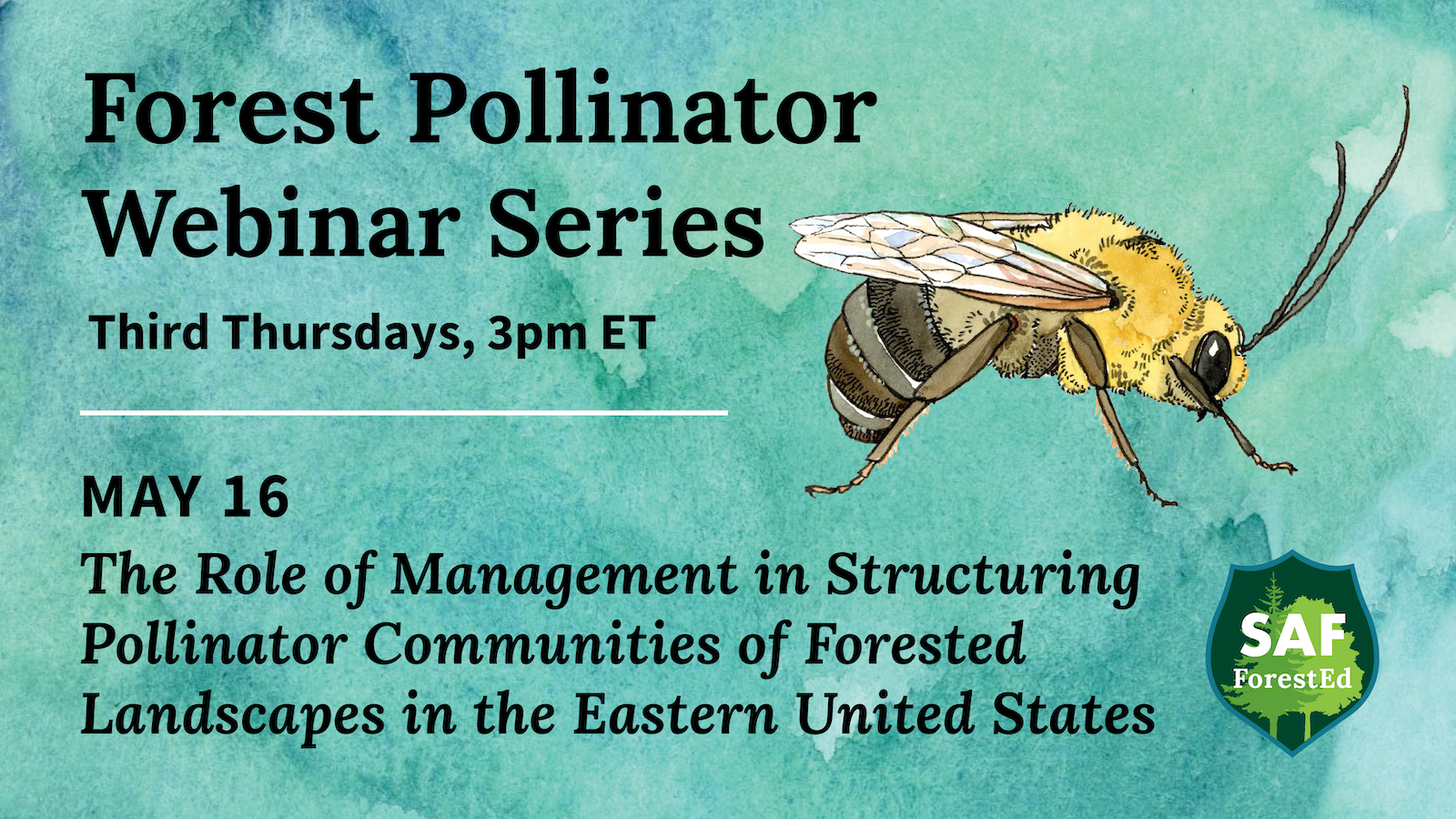
ArcGIS Pro Short Course Remastered
Come check out the newly remastered Migrating to ArcGIS Pro for Foresters Short Course, now open for registration. This course has been updated for the most recent version of ArcGIS Pro with enhanced audio and video components to ensure the best learning experience. Make the shift from ArcMap to ArcGIS Pro today with this course provided by LandMark Spatial Solutions.
$170 Member // $250 Non-member
New Cohort Opening Later
Paced at 4 sections over 4 weeks, limited to 50 registrants
7.5 Category 1 CFEs